
Kitesurfing history is one of those stories that still feels young when you look at the sport from the beach. The gear is clean, the riders are fast, the videos look modern and the Olympic version of the sport is now raced on hydrofoils at wild speeds. But the idea itself is much older and much stranger than most people think: use a kite as an engine, stand on something that slides over water and let the wind do the work.
What started as experiments, patents, beach prototypes and slightly sketchy early sessions became one of the most recognizable action sports in the world. Kitesurfing moved from inflatable beach toys and two-line power kites to depowerable bars, bow kites, wave riding, freestyle, Big Air, foil racing and finally Formula Kite at the Olympic Games.
This article breaks down the history of kitesurfing in a way that actually makes sense for riders: what changed, why it mattered and how the sport went from a fringe idea to an Olympic discipline without losing its beach culture.
What is kitesurfing, in simple terms?
Kitesurfing, also called kiteboarding, is a wind-powered board sport where the rider uses a controllable kite to generate pull while riding a board on the water. The board can be a twin-tip, surfboard, foil board or race board. The kite can be inflatable, foil-based or designed for a very specific discipline.
The core idea sounds simple. In practice, the sport depends on a full system: kite design, line length, control bar, safety release, harness, board shape, wind direction, rider skill and spot knowledge. That is why the history of kitesurfing is not just about who flew the first kite on water. It is about the moment the whole system became usable, safer and repeatable.
Before kitesurfing: people were already trying to ride the wind
The roots of kitesurfing go back long before the modern sport had a name. Kites have been used for pulling, lifting, signaling and experiments for centuries. On water, inventors kept returning to the same idea: could a kite replace a sail?
In the late twentieth century, several things started to come together. Windsurfing had already shown that board sports could explode globally. Paragliding, traction kites and power kiting were pushing kite control forward. Boards were improving. Materials were lighter. And beaches around the world had the perfect test lab: wind, water and people willing to crash a lot for a new feeling.
Early kite-powered water riding was raw. Control was limited, relaunching was hard and safety systems were far away from what riders now expect. A kite that fell into the water could end the session. A gust could pull someone down the beach. Gear was often homemade, modified or borrowed from other sports. The idea was exciting, but it was not yet a sport most people could learn through a school.
The inflatable kite changed everything
A major step in kitesurfing history came with the development of the inflatable kite. The French Legaignoux brothers, Bruno and Dominique, are widely associated with inflatable kite designs that became central to modern kitesurfing. The key idea was simple but huge: make a kite that could float, hold its shape and relaunch from the water.
That changed the sport from experiment to possibility. If your kite could relaunch, you could practice longer. If it held its shape better, you had more predictable pull. If schools could teach with equipment that behaved more consistently, the sport could finally spread beyond a small group of hardcore inventors and early adopters.
The Wipika era in the late 1990s became one of the big turning points. Inflatable leading edges, better bridles and water relaunch helped define the first real wave of commercial kitesurfing equipment. This was not the polished gear we ride today, but it opened the door.
The late 1990s: kitesurfing becomes a real scene
By the end of the 1990s, kitesurfing was no longer just a strange beach experiment. Schools started appearing. Shops started carrying kite gear. Riders from windsurfing, wakeboarding, surfing and paragliding crossed over because the sport offered something completely new: huge airtime from flat water, freedom in light wind and a strange mix of surfing and flying.
The early scene had a wild energy. Gear was powerful, safety systems were basic and the learning curve was not gentle. Many riders were figuring things out by watching each other. A good local beach crew mattered more than any manual. At some spots, kitesurfing looked like the future. At others, it looked like chaos.
This period also shaped the culture. Kitesurfing was not born inside a stadium. It grew on beaches, in vans, through local schools, magazine photos, VHS clips, forums and riders chasing wind around the coast. That DIY energy is still part of the sport.
The 2000s: safety, depower and real progression
The 2000s were the decade when kitesurfing became much more learnable. The sport still demanded respect, but the gear started to solve problems that had held it back.
The biggest changes were control and safety. Four-line inflatable kites became common. Depower improved. Quick release systems became more standard. Bow kites and supported leading edge designs helped increase wind range and gave riders more ability to reduce power quickly. Bars became cleaner. Leashes improved. Harnesses, boards and lessons became more specific to kitesurfing rather than borrowed from other sports.
This changed everything for progression. Beginners could learn with more control. Intermediate riders could ride upwind faster. Freestylers could unhook and push handle passes. Wave riders could use the kite more as a support tool. Schools could build step-by-step lessons instead of throwing people straight into survival mode.
The sport also split into disciplines.
| Discipline | What defined it | Why it mattered |
|---|---|---|
| Freeride | Cruising, jumps, transitions and upwind riding | Made kitesurfing accessible and fun for most riders |
| Freestyle | Unhooked tricks, passes and technical moves | Built the competition and video culture of the 2000s |
| Wave | Surfboards, down-the-line riding and strapless control | Connected kitesurfing to surf spots and ocean swell |
| Big Air | Height, loops and controlled aggression | Became one of the most visible sides of modern kiteboarding |
| Foil | Hydrofoil boards and light wind efficiency | Changed racing, travel quivers and low-wind sessions |
How kiteboarding competitions shaped the sport
Competition did not create kitesurfing, but it pushed progression hard. Freestyle events helped define what was possible with unhooked tricks. Big Air events made the sport easier for the public to understand: riders going huge, looping kites and landing with serious speed. Racing brought a different mindset, focused on efficiency, tactics and equipment development.
In the early years, the sport’s competitive identity changed often because the gear was changing so fast. One season a trick looked impossible. A few years later it became standard. Board shapes, kite profiles and bar systems could shift the direction of an entire discipline.
That speed of change is one reason kitesurfing felt so fresh compared with older sailing sports. It had no fixed tradition to protect. Riders tested things, brands reacted, schools adapted and the whole scene moved quickly.
The rise of Big Air and the video generation
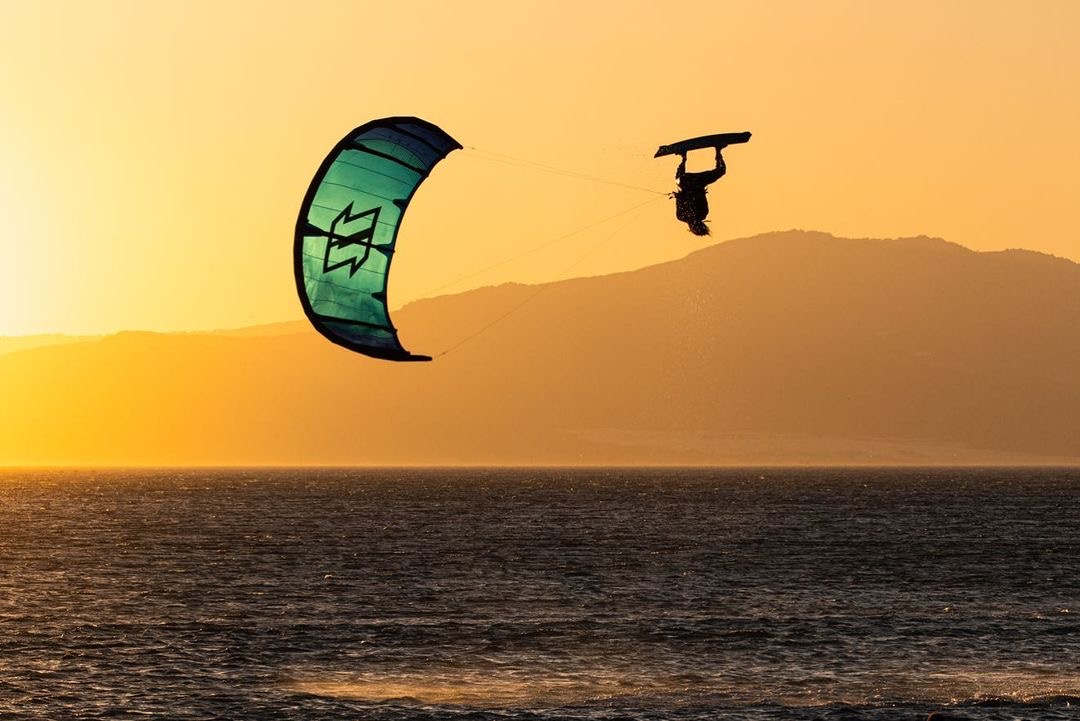
For many people outside the sport, Big Air is now the most recognizable version of kiteboarding. It is visual, easy to understand and brutal when conditions get heavy. The rider goes high. The kite loops. The landing has to be clean. Even someone who has never touched a control bar understands the risk and commitment.
Big Air grew naturally from freeride jumping, but modern gear gave it a new ceiling. More stable high-aspect kites, better control systems, stronger boards and better impact protection allowed riders to push height and loops in ways that were harder to imagine in the early 2000s.
The video era also changed everything. Kitesurfing is made for clips. A ten-second jump can travel further online than a long competition report. Platforms like Instagram, YouTube and TikTok helped riders, brands and spots become visible far beyond their local beach. That is part of why KitesurfingOfficial exists: the sport is global, visual and driven by community.
If you are into the progression side of the sport, the KitesurfingOfficial Leaderboard is a good place to follow the riders and clips shaping the current scene.
Foiling: the quiet revolution that led to the Olympics
While Big Air became the loud side of kiteboarding, foil racing became the technical side that eventually brought the sport into the Olympic Games. Hydrofoils changed the relationship between board and water. Instead of pushing through chop, the board lifts above the surface on a wing below the water. Drag drops, speed rises and riders can perform in much lighter wind.
For everyday riders, foiling opened new sessions in marginal conditions. For racing, it changed the whole game. Kite racers could sail tactical courses at high speeds with incredible upwind and downwind angles. That made kiteboarding more understandable inside the sailing world, because it could be raced around marks with rules, starts, strategy and measurable results.
Formula Kite became the racing format connected to this Olympic pathway. It uses high-performance foil kites and hydrofoil boards, with equipment regulated through class rules rather than being a one-design class where everyone rides exactly the same gear. That balance matters: it keeps development alive while creating enough structure for fair racing.
If you are new to the equipment side, the KitesurfingOfficial gear section and kite buyers guide are useful starting points for understanding how different kite types serve different styles of riding.
Kitesurfing and the Olympic pathway
Kiteboarding’s road to the Olympic Games was not a straight line. The sport had to fit into the sailing world, prove it could run structured events and show that the format worked for elite competition. The Youth Olympic Games in Buenos Aires in 2018 were an important milestone, giving kiteboarding a major Olympic-stage appearance before the senior Olympic debut.
World Sailing confirmed kiteboarding for the Paris 2024 Olympic sailing program in 2018, with Formula Kite becoming the selected equipment pathway. The discipline made its Olympic debut at Marseille during Paris 2024.
That moment was bigger than one regatta. It showed that a sport born from beach experimentation could stand next to long-established Olympic sailing classes. It also showed how far the technology had moved: from early water-relaunch kites to foil boards racing at serious speeds.
At Paris 2024, Ellie Aldridge won the first women’s Olympic gold medal in Formula Kite for Great Britain, and Valentin Bontus won the first men’s Olympic gold medal for Austria. Those results placed kiteboarding officially inside Olympic history, not just action-sport culture.
Did the Olympics change kitesurfing?
Yes and no.
The Olympics changed the visibility of the sport. Formula Kite suddenly had a global stage, national teams, federation support and mainstream media attention. Young riders could look at kiteboarding as a possible Olympic pathway, not only as a lifestyle sport or content-driven career.
But the Olympics did not replace the rest of kitesurfing. Most riders are not racing around marks on foil boards. They are riding twin-tips at their home spot, learning transitions, planning kite trips, chasing waves, sending jumps, buying their first harness or trying not to miss the best wind window of the day.
That is the strength of the sport. Kiteboarding can be Olympic and still be a beach culture. It can be technical and still feel free. It can have national teams and still have local crews launching at sunset after work.
Kitesurfing history by era
Here is the short version of kitesurfing history from a rider’s perspective.
| Era | What happened | Why it mattered |
|---|---|---|
| Early experiments | Kite traction on water was tested in different forms | The core idea existed before the sport was practical |
| 1980s to 1990s | Inflatable kite concepts and early prototypes developed | Water relaunch and structure became possible |
| Late 1990s | Wipika-style inflatable kites and dedicated boards appeared | Kitesurfing became a commercial sport |
| Early 2000s | Four-line systems, schools and safer setups spread | More people could learn and progress |
| Mid to late 2000s | Bow kites, better depower and cleaner bars arrived | Wind range and safety improved significantly |
| 2010s | Big Air, strapless wave, foil and global video culture grew | The sport split into strong modern disciplines |
| 2018 | Kiteboarding appeared at the Youth Olympic Games | Olympic pathway became visible |
| 2024 | Formula Kite debuted at the Paris Olympic Games | Kiteboarding became an Olympic discipline |
What beginners should learn from the history
The biggest lesson is that modern kitesurfing gear exists because earlier versions were hard, risky and limited. That should make beginners respect the sport, not fear it.
A good lesson program, modern safety systems and the right spot matter more than ego. You do not need to learn the way the first generation learned, by guessing and crashing until something works. Today, you can understand wind windows, safety release systems, kite size, body dragging, right of way and self-rescue before you ever try to ride away.
For the basics, start with KitesurfingOfficial Learn, check beginner guidance and use tools like the Kite Size Calculator and Wind Speed Converter to understand conditions before choosing equipment. These tools do not replace instruction, but they help you ask better questions at the spot.
Why the sport keeps evolving
Kitesurfing evolves because it sits between several worlds. It borrows from sailing, surfing, wakeboarding, paragliding, skate culture, foil technology and digital media. Every discipline pushes the others.
Racing makes gear more efficient. Big Air demands control and stability. Wave riding rewards drift and simplicity. Beginners need forgiving kites. Travelers want compact quivers. Creators push visual progression. Schools need safer, more durable equipment. Brands have to balance performance with usability.
That mix keeps the sport moving. The kite you see on the beach today is not the final version. Neither is the Olympic format, the Big Air standard or the way people discover spots online. Kitesurfing history is still being written every windy day.
The real legacy of kitesurfing
The real legacy of kitesurfing is not only that it reached the Olympic Games. It is that a strange wind-powered idea became a global language. You can show up at a spot in Europe, Brazil, South Africa, Morocco, Cape Verde, Australia or the Caribbean and understand the rhythm before anyone says much: wind check, rigging, launch, session, story, repeat.
That is what survived the transition from beach toy to Olympic discipline. The gear changed. The speed changed. The level went insane. But the reason people stay with the sport is still simple: when the kite loads up, the board releases and the wind carries you across the water, it feels like nothing else.
