There are around 3,000 usable kitespots worldwide. 30 of them are exceptional. We have been travelling to spots for over ten years, comparing marketing promises with reality, and have changed our minds about most top destinations more than once. Here is our honest best-of list, sorted by region.
One thing upfront: “Best spot” is subjective. A beginner needs something different from a freestyler. That is why we give a clear recommendation for every spot: who it is worth it for, and who it is not.
Europe: the 8 best spots
Tarifa, Spain. The undisputed wind capital of Europe. From the Levante (strong, easterly, demanding) to the Poniente (softer, westerly, beginner-friendly), Tarifa offers wind almost every day from May to September. Massive school infrastructure, a lively town, but overcrowded in high summer and more expensive than it was five years ago.
Who it’s for: All levels. Beginners should choose schools outside town, on the quieter beaches towards Bolonia.
Fuerteventura: Sotavento, Canary Islands. A long lagoon with reliable northerly trade winds. Side-onshore conditions, plenty of space, rideable throughout spring and summer. Host of the PWA Wave World Cup. The water is cooler than on the mainland.
Who it’s for: Advanced freeriders, beginner wave riders.
Sardinia: Punta Trettu, Italy. Probably Europe’s best beginner spot. Knee-deep flat water for hundreds of metres, Mistral from the northwest, relaxed atmosphere. Less famous than the classics, but much more laid-back.
Who it’s for: Beginners, freestyle newcomers.
Sylt, Germany. Germany’s premium spot. Real North Sea conditions: strong wind, Atlantic-style waves, several spots around the island. Cold water, but high spot quality and excellent infrastructure. Host of international competitions.
Who it’s for: Advanced riders and wave riders who want an authentic northern Germany experience.
Fehmarn, Germany. Germany’s biggest kite spot. Wulfener Hals is probably Europe’s best beginner lagoon. Several beaches around the island cover all levels. The school infrastructure is excellent, and the atmosphere is family-friendly.
Who it’s for: Beginners and intermediates, families.
Hyères: Almanarre, France. The Mediterranean mecca. The Mistral blows strong side-onshore in spring and autumn, and chop builds quickly. A lively French kite culture with many competitions.
Who it’s for: Intermediates and advanced riders who want Mediterranean vibes.
Brouwersdam, Netherlands. Holland’s big-air spot. Challenging and windy on the North Sea side, flatter and more controlled on the lake side. On windy days, half of the Dutch kite scene is here.
Who it’s for: Big-air lovers, advanced riders.
Karpathos, Greece. One of the windiest places in Europe. In summer, the Meltemi blows daily at 25–35 knots. Side-shore conditions, several bays for different levels. Host of the PWA Wave World Cup.
Who it’s for: Advanced riders who want real power. Not for beginners.
Africa: the 7 best spots
El Gouna, Egypt. The most reliable wind destination in the world. Thermally driven north-northwest wind almost every day from March to November. Flat-water lagoons for beginners and freestylers, warm temperatures, mature tourism infrastructure.
Who it’s for: Beginners to pros, freestylers. Anyone who wants one guaranteed kite week per year.
Dakhla, Morocco. A 40-kilometre-long lagoon in southern Morocco, one of the windiest places on earth. Waves on the Atlantic side, buttery flat water in the lagoon. Camp atmosphere instead of tourism resort.
Who it’s for: Intermediates and advanced riders, fans of wilder spots.
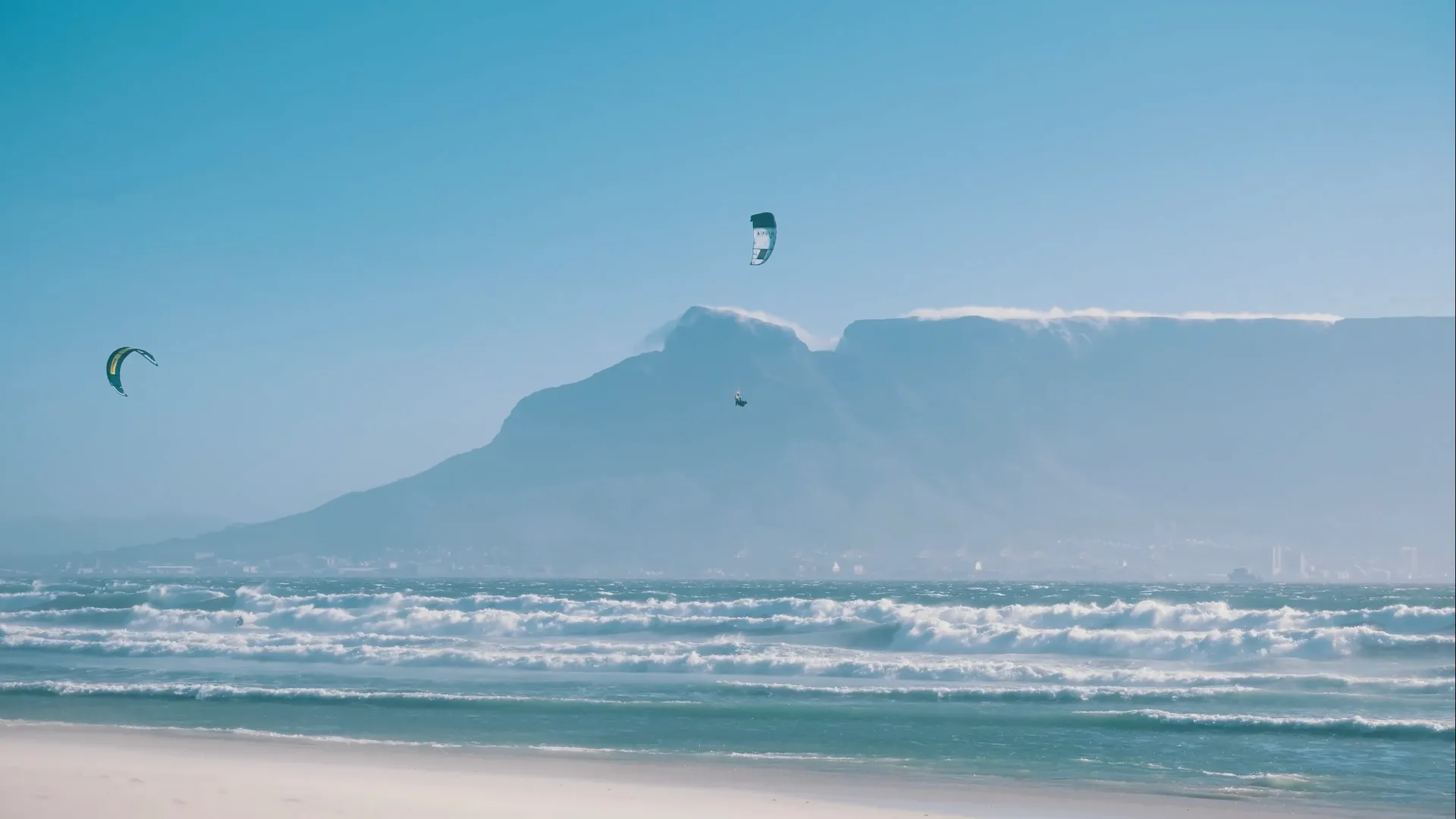
Cape Town, South Africa. The global capital of big air. The Cape Doctor blows from November to March, often at 30+ knots. Bloubergstrand, Big Bay and Langebaan cover every riding style. Home of the Red Bull King of the Air. Cold water means a wetsuit is essential.
Who it’s for: Big-air enthusiasts, competition dreamers. Not for beginners.
Essaouira, Morocco. Atlantic classic. Alizé trade winds in spring and summer, side-onshore. A city with a UNESCO-listed old town around it, giving the trip cultural depth beyond kitesurfing.
Who it’s for: Intermediates, culturally curious travellers.
Le Morne, Mauritius. Probably the most photographed kite backdrop in the world. A dramatic mountain-and-lagoon combination. Flat water inside the reef, the infamous “One Eye” wave outside it, only for pros.
Who it’s for: Advanced riders, photography lovers, honeymoon combinations.
Hurghada / Soma Bay, Egypt. The high-volume alternative to El Gouna. A larger school scene, slightly more affordable, warm all year round. Soma Bay offers the more luxurious version, with hotel resorts directly at the spot.
Who it’s for: Budget travellers, families, beginners.
Sal Island, Cape Verde. Atlantic island with consistent northeast trade winds from November to May. Warmer than the Canary Islands, with its own Creole-Portuguese culture. Several spots, from flat water to waves.
Who it’s for: A winter dream for European kiters, intermediates and advanced riders.
Americas: the 8 best spots
Cabarete, Dominican Republic. The Caribbean classic. Thermal afternoon winds, small waves outside the reef, flat water inside. A strong kite town with schools, bars and hostels.
Who it’s for: Beginners to advanced riders, social travellers.
Cumbuco, Brazil. The gateway to Brazil’s kite world. Constant trade winds from July to January, warm water, wide flat-water beaches. Starting point for legendary downwinders along Brazil’s northeast coast.
Who it’s for: Beginners and freestylers, anyone who loves the Brazil vibe.
Jericoacoara, Brazil. Reached by 4x4 over the dunes. Spectacular freshwater lagoons such as Lagoa do Paraíso. A car-free village with daily sunset rituals on the dunes. Hard to leave.
Who it’s for: Intermediates who prefer authenticity over mass tourism.
Maui: Kanaha, USA. The birthplace of modern kitesurfing. Side-shore trade winds, waves outside the reef, flat water inside. Strict launch rules and a strong local scene. Historic, beautiful, demanding.
Who it’s for: Advanced wave riders, culturally interested kiters.
Cape Hatteras, USA. The Outer Banks offer a unique combination: Pamlico Sound to the west is one of the largest flat-water lagoons in the world, while the Atlantic to the east delivers real waves. Two completely different sessions in one day.
Who it’s for: Intermediates to advanced riders, US travellers.
La Ventana, Mexico. Pacific winter spot in Baja California. “El Norte” wind blows from November to March, side-onshore, often 20+ knots. Desert landscape meets the sea, with a growing scene.
Who it’s for: Beginners to intermediates, winter guests from North America and Europe.
Coche Island / Margarita, Venezuela. Caribbean dream: flat water and 300+ windy days per year. Politically unstable, limited infrastructure. Those who make it there get sessions they'll talk about for years.
Who it’s for: Experienced travellers who value authenticity over comfort.
Bonaire, Caribbean Netherlands. Atoll Beach: a flat, protected Caribbean lagoon with year-round trade winds. Quieter than Aruba, less crowded than the Dominican Republic. Some of the Caribbean's best diving sits right next door.
Who it’s for: Beginners and freestylers, nature lovers.
Asia-Pacific: the 7 best spots
Boracay, Philippines. Bulabog Beach on the east side is the Philippine kite classic. Reliable Amihan northeast trade winds from November to April, flat and safe inside the reef. Tropical, very lively, often crowded.
Who it’s for: Beginners and intermediates, Asia travellers.
Kalpitiya, Sri Lanka. Asia’s standout destination. Two wind seasons: May to October (southwest monsoon) and December to March (northeast). Several lagoons, including the world-famous Kappalady. Growing infrastructure.
Who it’s for: Beginners to advanced riders, travellers with time.
Mui Ne, Vietnam. Southeast Asian classic with daily afternoon wind. Wide sandy beach, mix of flat water and small waves. Lively scene, many schools, tropically warm all year round.
Who it’s for: Beginners to intermediates, first-time Southeast Asia travellers.
Bali: Sanur, Indonesia. Reef-protected lagoon, easterly trade winds in the dry season. Bali’s all-round charm, from surf and kite to culture and food, makes it a long-stay favourite.
Who it’s for: Intermediates, long-term travellers, multi-sport lovers.
Madagascar: Sakalava Bay. One of the world’s most reliable wind seasons. Southern trade winds blow almost daily from April to November. Remote, with only a few kite camps. Long boat-accessed lagoons, perfect flat water, dramatic landscapes.
Who it’s for: Intermediates, adventure travellers with budget.
Zanzibar: Paje, Tanzania. One of Africa’s top destinations. Long, shallow tidal lagoon, huge at low tide. Trade winds in both seasons. Beach-hut atmosphere, barefoot pace.
Who it’s for: Intermediates, beach + kite combinations.
Masirah Island, Oman. The wildest of the wild top destinations. Khareef monsoon winds from May to September, real Indian Ocean waves. Remote, with a small but loyal kite scene.
Who it’s for: Advanced adventure kiters who want something extraordinary.
Which spots we would not recommend
Honest bonus list: spots that are heavily marketed, but where the reality does not quite match the hype:
- Florida Keys. Tropical, yes, but the wind is much less reliable than advertised. Disappointing compared with the Caribbean.
- Phuket, Thailand. Long gaps in the season, crowds, often weak wind.
- Bahrain. It works, but there is little reason to go unless you are already there for work.
How to choose the right spot for you
Three questions help you decide:
1. What is your level? Beginners need flat water and schools: Punta Trettu, El Gouna, Fehmarn. Advanced riders can handle waves and stronger conditions: Cape Town, Karpathos, Le Morne.
2. What time of year? European summer season: Mediterranean, North Sea, Tarifa. Winter: Egypt, Caribbean, Brazil, Southeast Asia. Shoulder seasons: Morocco, Canary Islands, Cape Verde.
3. What is your budget? Affordable: Egypt, Morocco, Brazil, Sri Lanka. Mid-range: Mediterranean, Caribbean. Premium: Mauritius, Maui, Madagascar.
Plan your first kite trip with some buffer. 7 days is the minimum, 10–14 days is ideal: that way, you still get enough sessions even if there are windless days.
Frequently asked questions
What is the best kitespot in the world? There is no objective answer. But if we had to choose a top 3 based on wind reliability, water quality, atmosphere and value for money: El Gouna for the most reliable wind, Tarifa for the best all-round experience, Dakhla for the best flat-water performance.
Where is the best place to learn kitesurfing? El Gouna for guaranteed wind and very good schools. Cabarete for the Caribbean version. Punta Trettu in Sardinia for the best European learning setup.
Which spot is best for a family kite trip? Soma Bay in Egypt and Fuerteventura combine both very well. Both have resort structures with non-kite activities and good spots at the same time.
When is the best time to travel to Cape Verde? November to May. During the European winter, with almost guaranteed wind and warm water.
What’s next
You can find specific spot details in our interactive spot map. For choosing the right gear for your trip, read our kitesurfing equipment guide. If you want to learn kitesurfing first, here is our beginner guide.