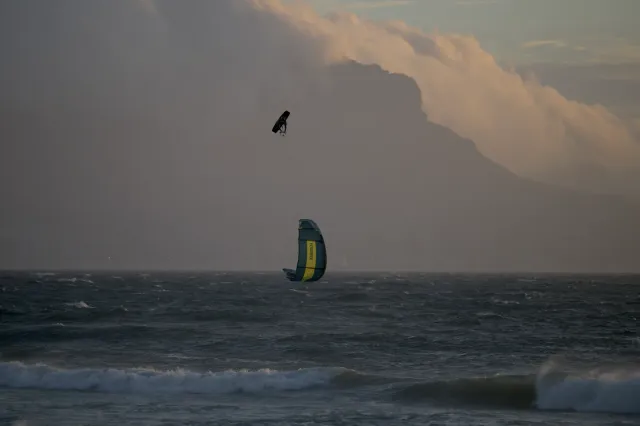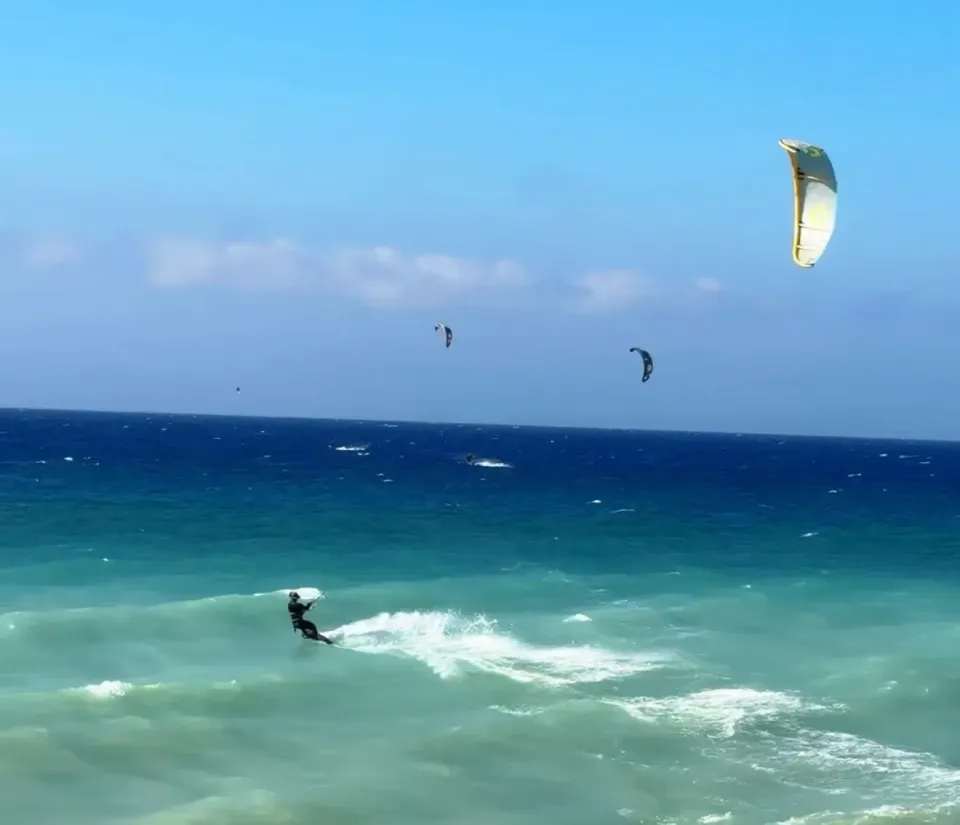
There is a reason half the kite industry migrates to Brazil every autumn: from August to December the northeast trade winds simply do not stop. Not "usually windy" — statistically, day after day, 15 to 30 knots of warm side-shore wind along hundreds of kilometers of sand. We cover the whole coast in our Brazil spot guide; this is the tour of the places that earn the flights.
The short answer
Base yourself in Cumbuco for convenience and lessons, Taíba or Paracuru for waves plus flat, Icaraizinho for the friendliest all-round week, Preá/Jericoacoara for the postcard and the Tatajuba lagoon, Ilha do Guajiru for endless shallow flat water, and Atins for the far-flung adventure. Season: August to December, with September–November as the guaranteed core.
Cumbuco: the gateway
Forty minutes from Fortaleza's international airport, Cumbuco is where most Brazil careers start: dozens of schools, every service in walking distance, and honest side-shore wind on a big open beach. The sea has chop and the crowds are real in peak season — this is the base camp, not the destination. Learn here, gear up here, then move up the coast. The Cauípe lagoon just upwind is the classic flat-water training ground.
Taíba and Paracuru: wave and flat in one session
An hour further northwest, Taíba serves both menus: a river-mouth flat section and proper waves on the outside, which is why the GKA wave tour has stopped here. Paracuru, its neighbor, offers a similar double life with fewer visitors. For intermediate riders who want to try everything in one week, this pair is the smart pick.
Icaraizinho: the crowd-pleaser
Icaraí de Amontada — everyone says Icaraizinho — bends around a palm-backed bay where the wind comes side-shore over your left shoulder and the water goes from morning-flat to playful. It suits almost everyone: beginners in the inside, freeriders everywhere, families in the pousadas. If you book one week in Brazil without knowing your preferences yet, book it here.
Preá and Jericoacoara: the postcard, plus Tatajuba
Jeri is the famous one — dune sunsets, sand streets, nightlife — and its kite beach is actually Preá, ten windy kilometers east. The wind here carries a little more punch than further south, and the day trip everyone makes is the Tatajuba lagoon: mirror-flat water behind a dune field, the image most people have in mind when they dream about Brazil. Stay in Preá to ride, visit Jeri to celebrate.
Ilha do Guajiru: the flat-water factory
Further up the coast, a tide-fed lagoon runs for kilometers behind a sand spit: knee-to-waist deep, butter flat, and windy like everywhere else. The freestyle scene loves it — the GKA has run freestyle here — and beginners love it for the same reasons: forgiving depth, no waves, endless space.
Atins: the edge of the map
Where the Lençóis Maranhenses dunes meet the sea, Atins is the expedition option: a sand-street village, river-mouth flats, and the feeling of riding somewhere that most maps still whisper about. Getting there takes commitment — which is exactly the filter that keeps it quiet.
The downwinders
Brazil's signature experience is not a spot but a direction: the wind blows the same way down the entire coast, so multi-day downwinders — Cumbuco to Jeri is the classic — chain beaches, river mouths and lagoons into 40–80 km riding days with a support buggy carrying your bags. Most schools organize them; do one with a guide before dreaming up your own, since river mouths and empty stretches demand local knowledge.
The practical part
Season: August to December on the Ceará coast, September–November the safest core; our month-by-month planner shows how Brazil fits the global calendar. Kite sizes: most 75 kg riders live on a 9m, with an 8 and a 10 covering the edges. Water and air: warm enough that your packing list needs boardshorts, sun protection and zinc, no wetsuit. Wind pattern: builds through the morning, peaks afternoon, rides until sunset. Lessons: the school density around Cumbuco and Icaraizinho makes Brazil one of the cheapest wind-guaranteed places on earth to learn — many European schools relocate their entire operation here for the season, and their courses often cost less than at home.